Revision surgery corrects a result. Restorative plastic surgery rebuilds the natural foundation.
If a previous cosmetic procedure left you looking unnatural, disproportionate or simply not like yourself, or if a once-good result has changed with time, restorative plastic surgery may offer a path forward.
Restorative plastic surgery is David Sayah, MD, FACS’s approach to complex revision and corrective plastic surgery in Beverly Hills. Rather than focusing only on correcting one visible problem, Dr. Sayah evaluates how a previous procedure changed the underlying anatomy, soft tissue, scars and natural proportions. The goal is to restore those foundations first and then refine the result.
Dr. Sayah treats patients from Beverly Hills, Los Angeles and throughout Southern California who are seeking complex revision and corrective plastic surgery.
Dr. Sayah’s philosophy is simple: restore first, then refine.
Why Experience in Reconstructive Plastic Surgery Matters
David Sayah, MD, FACS is a board-certified plastic surgeon and Fellow of the American College of Surgeons with more than 26 years of experience in aesthetic and reconstructive plastic surgery. After general surgery training at NYU Medical Center, he completed his plastic and reconstructive surgery residency at UCLA Medical Center, where his training included complex reconstruction.
Dr. Sayah subsequently completed advanced fellowship training in endoscopic plastic surgery under Dr. Nicanor Isse, a pioneer in the field. He has published research involving wound healing, scar formation and surgical techniques, co-authored a textbook chapter on endoscopic facelift and brow lift surgery, and taught advanced endoscopic techniques to other surgeons.
That background is particularly relevant in revision surgery. Previous procedures can leave scar tissue, altered anatomy, displaced structures, thinned tissues or missing structural support. Correcting these problems can require reconstructive expertise in addition to aesthetic judgment.
Dr. Sayah’s restorative approach is built around a central principle: restore natural anatomy and proportion first, then refine the aesthetic result.
I had my 2nd procedure with the Sayah Institute and it was nothing short of amazing 🤩. Dr.Sayah is one of the most knowledgeable, respectful, caring and gifted surgeons I’ve ever met!! He cares about what’s best for his patients and then he execute the procedure. I am so glad I reached out to The Sayah institute because the entire staff are very supportive, caring , and helpful. Natalie basically held my hand through the entire process and made sure all my needs were met. They not only take care of me as a patient but they let me know that I’m family as well. Now, that’s the best feeling ever coming from your provider and his staff!!!
A Fresh Start, Without Judgment
Living with the result of a cosmetic procedure you are unhappy with can be frustrating. It can also make trusting another plastic surgeon difficult.
Some patients come to Dr. Sayah because a previous surgery never produced the result they expected. Others were initially happy but have experienced changes as they aged, gained or lost weight, went through pregnancy or menopause, or simply developed different aesthetic preferences.
Whatever brought you here, the first step is understanding what happened and what can realistically be improved.
Dr. Sayah provides a private, confidential and judgment-free setting. He listens to your concerns, reviews your previous procedures and explains the available options before recommending treatment.
Dr. Sayah’s Restorative Plastic Surgery Approach
Every restorative procedure begins with a diagnosis.
Dr. Sayah first determines how your anatomy has changed and why the current result looks or feels the way it does. Previous surgery is part of that investigation, but it is not the entire story.
Aging, pregnancy, hormonal changes, weight fluctuations and changes in skin elasticity can alter a surgical result over time. Significant or rapid weight loss, including weight loss associated with GLP-1 medications, can further change facial and body volume and make a previous procedure appear different years later.
Aesthetic preferences can change as well. A patient who once wanted more dramatic breast or buttock augmentation may later prefer a smaller, more natural silhouette.
For that reason, Dr. Sayah does not begin by asking how to recreate the past. He evaluates your anatomy today and works with you to determine what will look balanced and natural going forward.
When available, patients are encouraged to provide operative reports, implant information and photographs from before and after previous procedures. These can help Dr. Sayah understand what was done, how the anatomy was altered and what options may now be appropriate.

Restore the Anatomy First
The central principle of restorative plastic surgery is rebuilding natural anatomy and landmarks before trying to improve the cosmetic result.
In breast implant removal, for example, restoration may involve removing the implants, addressing the surrounding capsule when appropriate, repairing or repositioning the pectoralis muscle, re-establishing the natural breast fold and reshaping the remaining breast tissue.
In revision facial surgery, restoration may mean repositioning tissues that were previously pulled in an unnatural direction, restoring support to a lower eyelid, correcting a distorted earlobe or rebuilding structural support in the nose.
In body contouring, it may involve correcting irregularities left by previous liposuction, reducing excessive volume from a prior BBL or restoring more natural transitions between treated and untreated areas.
Once the underlying anatomy has been addressed, Dr. Sayah can refine shape, volume, proportion and scars.

Breast Implant Removal and Revision Breast Surgery
Breast surgery is one of the most common areas in which Dr. Sayah applies his restorative approach.
Women may seek revision for capsular contracture, implant rupture, implant malposition, bottoming out, double-bubble deformity, rippling, animation deformity, asymmetry or changes that developed after pregnancy, aging or weight loss. Others simply reach a point where they no longer want breast implants.
Removing an implant, however, does not automatically restore the breast to its pre-augmentation appearance. Years of augmentation can stretch skin, thin breast tissue and alter the relationship between the implant, chest muscle and breast fold.
Depending on the patient’s anatomy and goals, Dr. Sayah may combine breast implant removal with muscle repair, breast lift surgery, tissue reshaping or autologous fat grafting.
Fat grafting uses the patient’s own fat, harvested from another area of the body, to selectively restore volume and shape without replacing the removed implant with another implant.
The objective is not simply explantation. It is to create the most natural breast shape possible with the anatomy and tissue available.
Related: Breast Implant Removal | Breast Implant Revision
BBL Reversal and Revision Body Contouring
Restorative plastic surgery can also address patients who feel a previous Brazilian butt lift, liposuction procedure, tummy tuck or other body contouring surgery produced an unnatural or disproportionate result.
Patients may seek BBL reversal or buttock reduction because their buttocks are larger than they now prefer, appear disproportionate to their frame, have become asymmetric or have changed following weight loss.
Revision may involve strategically reducing excess fat, correcting contour irregularities, reshaping adjacent areas or addressing skin laxity. The appropriate technique depends on how the original procedure was performed and how the patient’s tissues have changed since surgery.
Dr. Sayah’s goal is not simply to make an augmented area smaller. It is to restore a more natural relationship between the buttocks, hips, waist and surrounding anatomy.
Revision body contouring can also address dents or irregularities following liposuction, unnatural abdominal contours, visible or poorly positioned tummy tuck scars, persistent diastasis and other concerns following previous body surgery.
Restorative Facial Plastic Surgery
Revision facial surgery requires particular attention to natural anatomical landmarks because even small distortions can change how the entire face is perceived.
Dr. Sayah evaluates patients with concerns following facelift, eyelid surgery, rhinoplasty, lip procedures, facial implants, fillers and other facial treatments.
Examples include an overly pulled or windswept appearance after facelift surgery, visible facelift scars, pixie ear deformity, lower eyelid retraction, hollow eyes following blepharoplasty, residual eyelid bags, nasal asymmetry or breathing problems after rhinoplasty, displaced facial implants and unnatural volume from excessive or migrated filler.
Depending on the problem, treatment may involve surgical reconstruction, tissue repositioning, fat grafting, implant removal or revision, scar treatment or, in the case of certain hyaluronic acid fillers, nonsurgical dissolution with hyaluronidase.
Not every problem requires another operation. Dr. Sayah recommends the least invasive approach that he believes can realistically address the concern.
Gynecomastia Revision and Restorative Plastic Surgery for Men
Men can also experience unnatural or unsatisfactory results following previous cosmetic surgery.
One of the most common restorative procedures Dr. Sayah performs in men is gynecomastia revision.
Removing too much tissue during gynecomastia surgery can create a crater or saucer deformity beneath the nipple. Removing too little can leave residual breast tissue or fullness. Previous surgery can also create asymmetry or unnatural transitions between the chest and surrounding tissues.
Dr. Sayah evaluates the entire male chest rather than focusing only on the original surgical site. Depending on the problem, restorative treatment may involve removing residual tissue, redistributing or adding fat, releasing scar tissue or reconstructing the natural contour of the chest.
He also treats men seeking correction of pectoral implant problems, prior liposuction irregularities and other unnatural results following male body contouring.
Related: Gynecomastia Surgery | Body Implant Removal


Fat Grafting and the Patient’s Own Tissue
A recurring theme in restorative plastic surgery is using the patient’s existing tissue whenever appropriate.
Autologous fat grafting allows Dr. Sayah to remove fat from an area where it is unwanted, carefully prepare it and transfer it to another area where additional volume or structural refinement is needed.
Fat grafting may be useful after breast implant removal, gynecomastia over-resection, facial volume loss, contour irregularities and selected revision body procedures.
It is not appropriate for every patient or every problem, and transferred fat does not have a guaranteed survival rate. In some cases, staged treatment or additional fat grafting may be necessary.
The objective is not simply to add volume. Fat is placed strategically to rebuild contours and create smoother, more natural transitions.
Advanced Scar Management
Scars are particularly important in revision surgery because patients may already have scars from one or more previous procedures.
Dr. Sayah has conducted research involving wound healing and scar formation, and scar management is incorporated into his restorative planning from the beginning.
When appropriate, poorly positioned or widened scars may be revised. Dr. Sayah seeks to minimize tension during closure and position scars as discreetly as the anatomy and procedure allow.
Post-operative scar management may include a structured treatment protocol based on how the individual patient heals.
For selected procedures, his advanced training in endoscopic surgery may also allow surgical access through smaller or more concealed incisions.
When Restorative Surgery May Require More Than One Stage
Complex revision surgery sometimes cannot, and should not, be completed in a single operation.
Tissues that have been significantly stretched, scarred, thinned or displaced may need time to heal and adapt before another stage is performed. Fat grafting may also require more than one treatment to achieve the desired volume.
Dr. Sayah discusses these possibilities before surgery and provides a realistic treatment plan based on the condition of the tissues, previous procedures and the patient’s goals.
The goal is improvement and restoration of proportion, not a promise to recreate exactly how someone looked before their original procedure.
Restorative Plastic Surgery Before and After Photos
Before-and-after photographs can be particularly helpful when considering revision surgery because they demonstrate the types of anatomical problems Dr. Sayah has treated and the different approaches that may be required.
View Dr. Sayah’s restorative and revision plastic surgery before-and-after gallery to see examples involving breast, face and body procedures.
Individual results vary. Before-and-after photographs are shown for educational purposes and do not guarantee a specific outcome.
Preparing for a Restorative Plastic Surgery Consultation
If possible, bring your operative reports from previous procedures, implant cards or information about any implants, photographs taken before and after your original surgery, a list of current medications and information about significant recent weight changes.
Do not postpone a consultation simply because you cannot obtain everything. Dr. Sayah can still evaluate you and determine what additional information may be helpful.
The consultation is intended to answer three fundamental questions: what has changed anatomically, what can realistically be improved, and what approach offers the most appropriate path forward.

Frequently Asked Questions About Restorative and Revision Plastic Surgery
-
Restorative plastic surgery is Dr. Sayah’s approach to revision and corrective plastic surgery. It focuses first on identifying and restoring altered anatomy, natural landmarks and proportion, then refining the aesthetic result.
-
Revision plastic surgery generally refers to a secondary procedure performed to correct or improve the result of previous surgery. Dr. Sayah uses the term restorative plastic surgery to describe a broader approach that emphasizes reconstructing natural anatomy and proportion rather than simply revising the visible result.
-
Many of Dr. Sayah’s restorative patients come to him after procedures performed elsewhere. Whether a result can be improved, and to what extent, depends on the original procedure, current anatomy, scar tissue, tissue quality and other factors. A consultation is necessary to determine realistic options.
-
It can be. Previous surgery can leave scar tissue, altered anatomy, thinned tissues or missing structural support. These factors can make secondary surgery more technically complex and are among the reasons reconstructive experience can be important.
-
Yes. Some women choose breast implant removal without another implant. Depending on the amount and quality of remaining breast tissue, Dr. Sayah may discuss a breast lift, tissue reshaping, fat grafting or a combination of techniques to restore a natural breast shape.
-
For appropriately selected patients, autologous fat grafting can be used to restore some breast volume after implant removal. Fat is harvested from another area of the patient’s body and strategically transferred to the breast. The amount that can be transferred and retained varies by patient.
-
In selected patients, an overly large or disproportionate result from a previous BBL may be reduced and reshaped. The treatment depends on the location of the transferred fat, skin quality, surrounding contours and the patient’s desired proportions.
-
Some facelift problems can be improved with revision surgery. Dr. Sayah evaluates the direction and position of facial tissues, scars, ears, hairline and other anatomical landmarks to determine what can realistically be restored or improved.
-
Some hyaluronic acid fillers can be dissolved with hyaluronidase. Other fillers and problems may require a different approach. Dr. Sayah first identifies the product and the cause of the concern before recommending treatment.
-
Yes. Gynecomastia revision may address residual tissue, asymmetry or an over-resected chest that has developed a crater or saucer deformity. Treatment is individualized to restore a more natural masculine chest contour.
-
Timing depends on the procedure and the problem being treated. In many cases, tissues need several months to heal, soften and settle before revision surgery is appropriate. Certain complications may require earlier evaluation or treatment. Dr. Sayah will recommend timing based on your individual situation.
-
No surgeon can guarantee that every previous result can be completely reversed or corrected. Many concerns can be meaningfully improved, but the available options depend on how the anatomy and tissues were changed by previous procedures. Dr. Sayah provides an individualized assessment of what he believes can realistically be achieved.
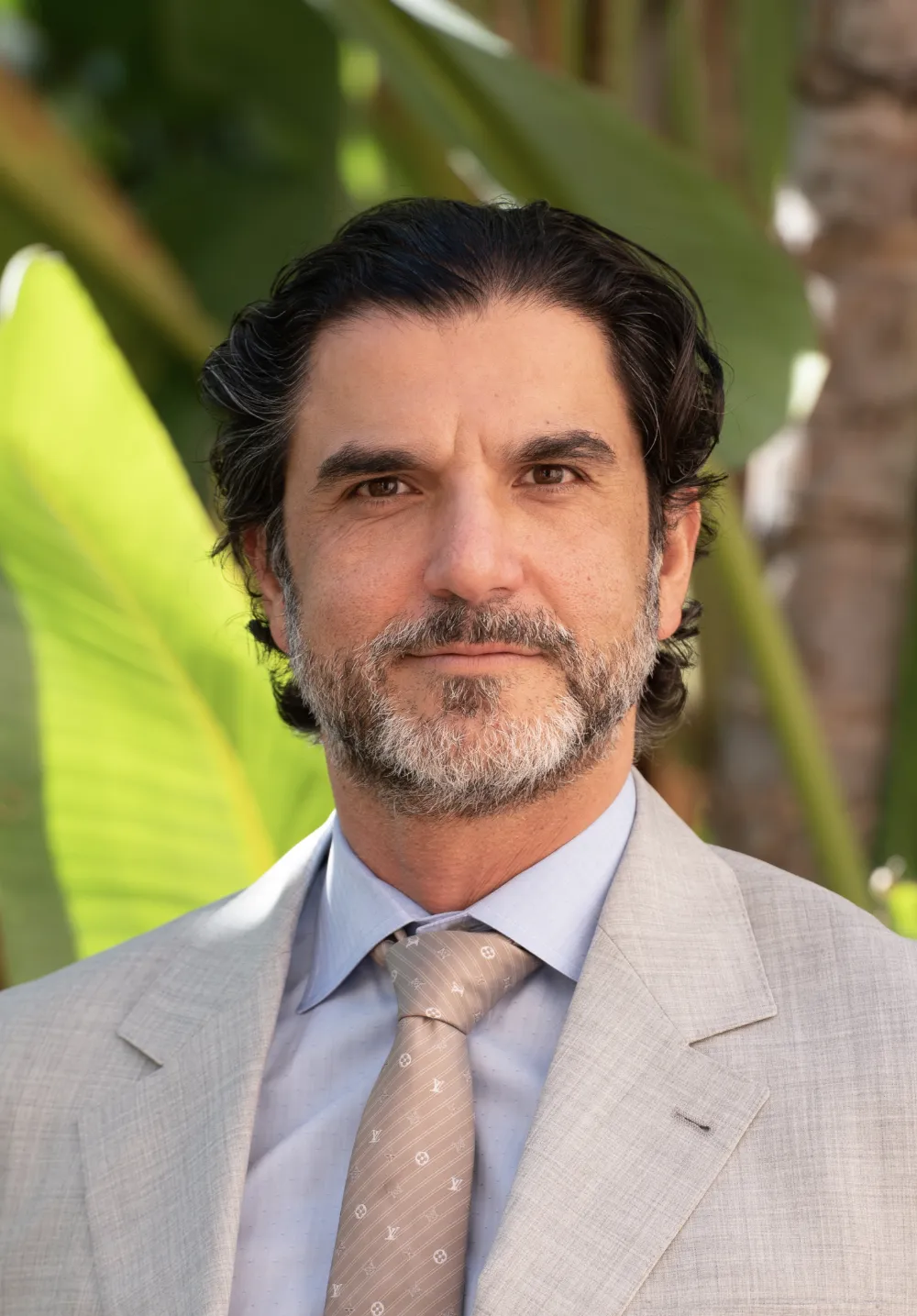
Why Choose Dr. David Sayah for Restorative Plastic Surgery?
David Sayah, MD, FACS is a board-certified plastic surgeon and Fellow of the American College of Surgeons with more than 26 years of experience in Beverly Hills.
His background combines aesthetic plastic surgery with extensive reconstructive training, advanced endoscopic surgical training, published research involving wound healing and scar formation, and an artistic background in painting and sculpture.
For patients seeking revision surgery, that combination is particularly relevant. Restorative plastic surgery is not simply about changing what is visible. It requires understanding what was done previously, identifying what has changed beneath the surface and determining how anatomy, soft tissue and proportion can be reconstructed and refined.
Dr. Sayah performs surgery at The Institute of Surgical Arts, an accredited ambulatory surgery center located within his Beverly Hills office, providing a private surgical setting for appropriately selected procedures.
Meet Dr. David Sayah
Dr David Sayah is a board certified plastic surgeon in Beverly Hills known for his natural approach to aesthetic surgery. With more than 26 years of experience, he combines surgical precision with artistic insight to deliver balanced and refined results. His philosophy centers on enhancing individual beauty rather than changing it.
A graduate of the UCLA School of Medicine and a Fellow of the American College of Surgeons, Dr Sayah trained at leading medical centers including NYU and UCLA. His work in wound healing and scar formation research helps patients heal beautifully with minimal scarring. Fluent in five languages, he welcomes patients from Beverly Hills, Los Angeles, and across the world who seek exceptional, natural results.
Schedule a Restorative Plastic Surgery Consultation in Beverly Hills
If you are unhappy with the result of a previous cosmetic procedure, have experienced changes in a once-good result, or simply want to return to a more natural appearance, schedule a private consultation with David Sayah, MD, FACS at The Sayah Institute in Beverly Hills.
Dr. Sayah will review your previous treatment, evaluate your current anatomy and goals, and explain what may realistically be improved through restorative or revision plastic surgery.
Individual results vary. Information on this page is educational and does not replace an individualized medical evaluation.